
SEO Audit & Strategy
Identify technical issues, content gaps, and the opportunities most relevant to your business.
Build sustainable search visibility with a practical SEO strategy focused on technical health, useful content, and the right audience.
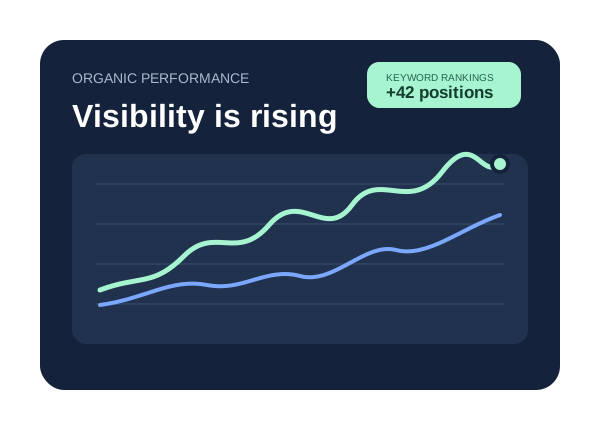
SEO works best when technical foundations, content, and search intent support one another. We help you improve discoverability with a clear plan and transparent reporting — without promises of instant rankings.
Identify technical issues, content gaps, and the opportunities most relevant to your business.
Improve crawlability, indexing, site structure, page experience, and technical hygiene.
Optimize page titles, headings, internal links, metadata, and content relevance.
Plan helpful content around audience questions, search intent, and your services.
Strengthen local search signals and business information for relevant service areas.
Track visibility, organic traffic, and meaningful actions to guide ongoing priorities.
Good work comes from understanding the challenge, agreeing on priorities, and improving with evidence.
Review your site, search landscape, current visibility, and business goals.
Build a roadmap that balances technical fixes with content opportunities.
Implement agreed improvements across pages, structure, and content.
Review progress and update the roadmap as search behaviour changes.
We bring strategy, creative thinking, and technical execution together so every piece supports a clear business outcome.
Search engine optimization helps search engines understand your website and helps potential customers find relevant pages. Effective SEO is not a single change or a promise of instant rankings. It combines technical health, search intent, helpful content, internal linking, user experience, and consistent measurement over time.
A technical review can examine crawlability, indexability, status codes, redirects, canonical tags, XML sitemap quality, robots directives, mobile usability, structured data, and page experience. The priority is to identify issues that prevent important pages from being discovered or understood and to create a practical order for resolving them.
Keyword research should consider what people are trying to achieve, not only the phrases they type. We group relevant topics by intent and map them to pages so each important service has a clear purpose and content that answers the searcher's likely questions.
On-page optimization can include descriptive title tags, compelling meta descriptions, one clear primary heading, useful subheadings, concise URLs, relevant internal links, image alt text, and content that directly addresses user needs. Metadata helps communicate relevance but does not guarantee rankings.
Helpful service pages, detailed guides, comparison content, and FAQs can answer questions across the customer journey. Content should be original, accurate, easy to scan, and genuinely useful rather than expanded only to repeat keywords. Each page should have a distinct search intent and avoid unnecessary duplication.
For businesses serving specific areas, local SEO may include business profile optimization guidance, consistent contact information, relevant service-area content, local landing pages where useful, and a process for earning and responding to genuine customer reviews.
Search Console and analytics data can help monitor impressions, clicks, queries, landing pages, engagement, and meaningful conversions. Rankings fluctuate, so reporting should consider trends and business outcomes rather than relying on a single keyword position.
SEO priorities are based on your site, market, competition, and available resources. A typical roadmap includes:
Review technical health, indexation, existing content, analytics, and current search visibility.
Identify relevant topics, audience questions, search intent, and competitor content gaps.
Improve priority pages, site structure, internal links, technical issues, and content usefulness.
Review organic trends and conversions, then adjust the roadmap using evidence.
SEO may include technical audits, keyword research, on-page optimization, content planning, internal linking, local SEO, and reporting.
Timelines vary by competition, website history, technical health, content quality, and implementation. Results often take several months and cannot be guaranteed.
Yes. Local SEO may include business profile guidance, location pages, local relevance, and consistent business information.
No provider can responsibly guarantee specific rankings. We focus on best practices, measurable improvements, and transparent reporting.
Let’s turn your goals into a clear plan, a better digital experience, and measurable progress.
Talk to our team about website development, software, SEO, and digital marketing.